



































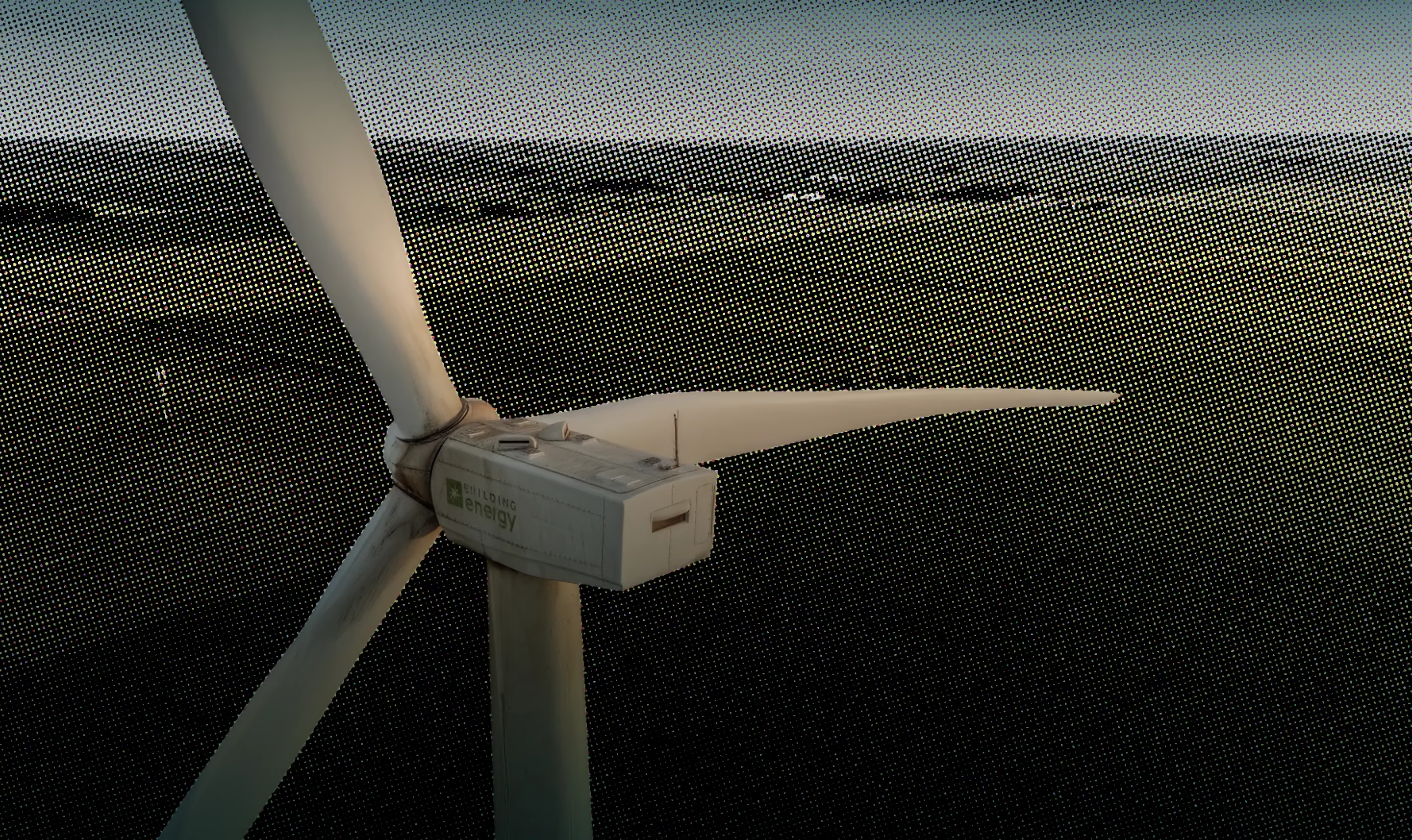


Wind carbon credits from metered turbine output
See how we turn turbine output into verified credits, from the grid baseline to issuance, so wind generation earns carbon revenue.
Wind generation, credited against the power it displaces

What it is
Onshore or offshore turbines generate electricity for a grid or for an off-grid load. Each unit replaces power from more carbon-intensive sources.

Why this method
The baseline logic is the same as for solar, and calibrated meters and SCADA logs give verifiers turbine-level data to check each credit against.
How a wind credit is calculated and checked
Methodology
Baseline: the local grid emission factor or, off the grid, the fuel the turbines replace. The gap between that baseline and what the project emits is what gets credited. Bar proportions are illustrative.
The baseline is the local grid emission factor or, for off-grid loads, a fuel-displacement calculation for the fossil generation the turbines replace.
Metered net generation, multiplied by the baseline emission factor and less any project emissions, gives the tonnes of CO2e a verifier can confirm.
Verifiers compare turbine availability and capacity factor on site against the design you registered.
MRV approach
1. Calibrated meters
Calibrated meters at each turbine, or at the plant's point of interconnection, record the electricity that reaches the grid.
2. SCADA generation logs
Generation logs from the plant's control system back up the meter readings with a second record of output.
3. Turbine availability
Periodic site checks confirm how much of the time turbines are ready to run, against your registered design.
4. Capacity factor
Verifiers compare the capacity factor the plant achieves with the one in your registered design.








Straight answers on wind credits
Start with the questions we hear most before a wind project begins, then bring us your details.
Wind is replenished by natural air movement, so turbines generate power without burning fuel. An eligible wind project earns credits by showing reductions against an approved baseline, usually the local grid emission factor.

Yes. The method covers onshore and offshore turbines that feed a grid or serve an off-grid load. Eligibility still depends on the standard, the methodology, and the project's start date, which we check during screening.
We use calibrated meters at each turbine or at the plant's point of interconnection, backed by SCADA generation logs. Periodic site checks confirm turbine availability and capacity factor against your registered design.
Metered net generation is multiplied by the baseline emission factor, usually the local grid factor, and project emissions are then subtracted. The remainder, in tonnes of CO2e, is what a verifier can confirm and the registry can issue as credits.
Capacity factor is the share of a turbine's maximum possible output that it actually delivers over time. Verifiers check it against your registered design, so a realistic figure at the design stage avoids questions later.